An attic bedroom is naturally intimate. The lower ceiling lines, angled walls, and tucked-away layouts make these rooms feel cocooned — perfect for sleep-focused design. Instead of trying to replicate a standard bedroom, the most compelling attic conversion bedroom ideas lean into proportion, texture, and atmosphere to create a sense of calm that feels uniquely tailored.
Interior design specialist Melanie Whetstone explains: “The most successful attic bedroom design embraces the slope, beams, and angles as defining features. When you treat them as assets, the room instantly feels intentional.”
This guide explores real, lived-in spaces — including imagery from customer homes — to help you get ideas and start creating your own elevated retreat.
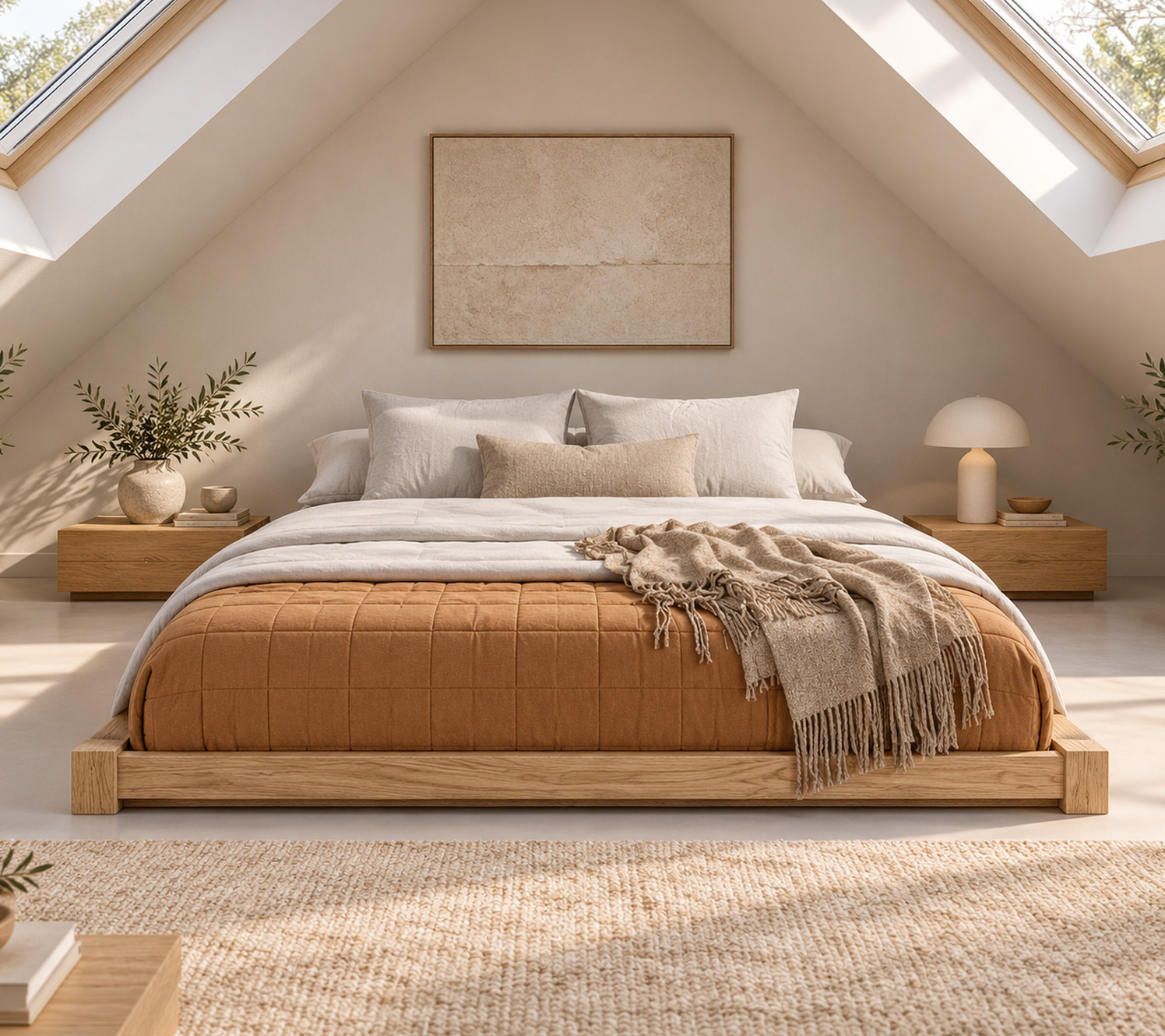
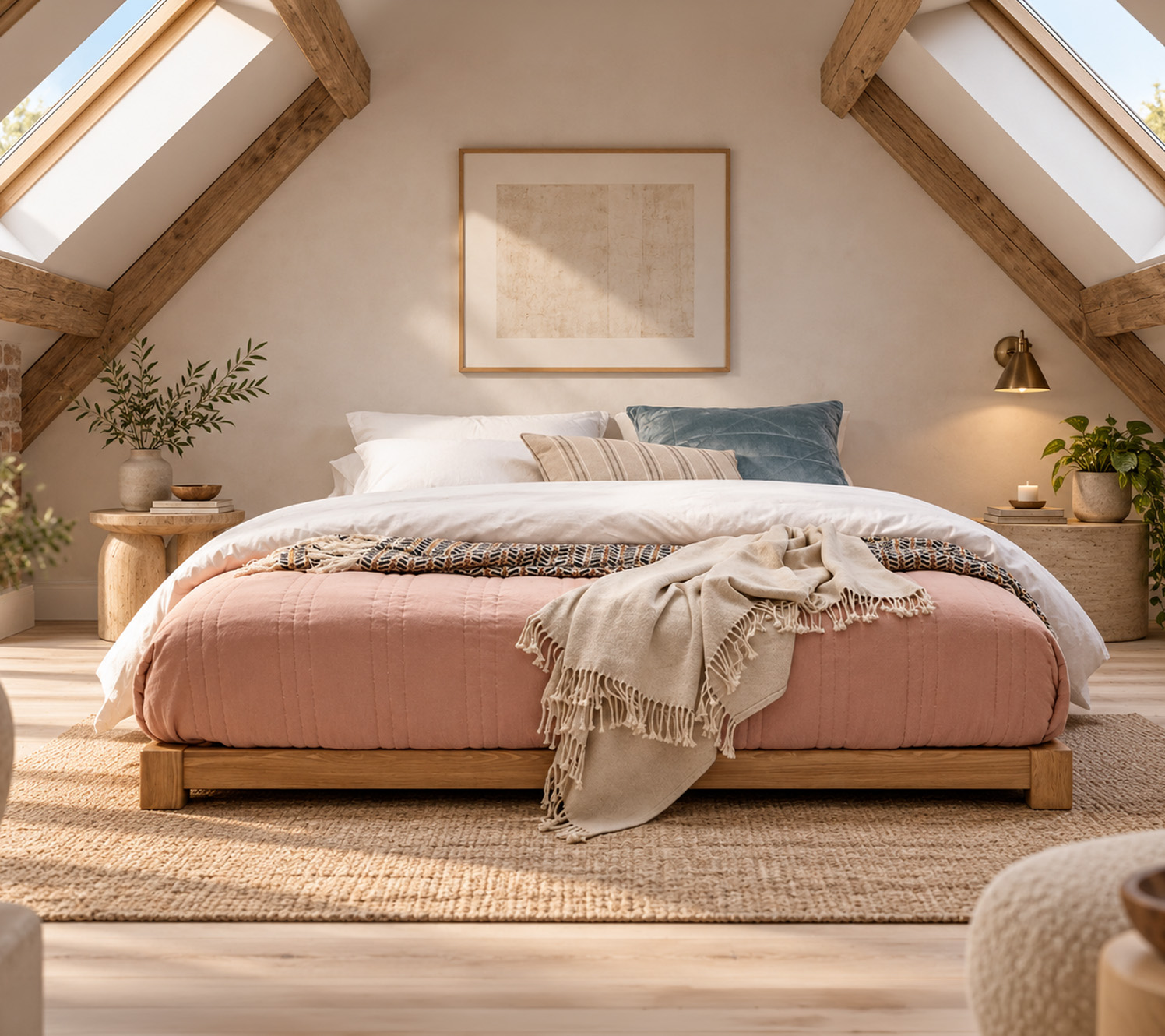
The key to thoughtful attic bedroom ideas is working symmetrically beneath the slope. Positioning the bed in the center under the apex creates balance and gives the architecture purpose, rather than letting it feel restrictive. It transforms awkward angles into a framing device.
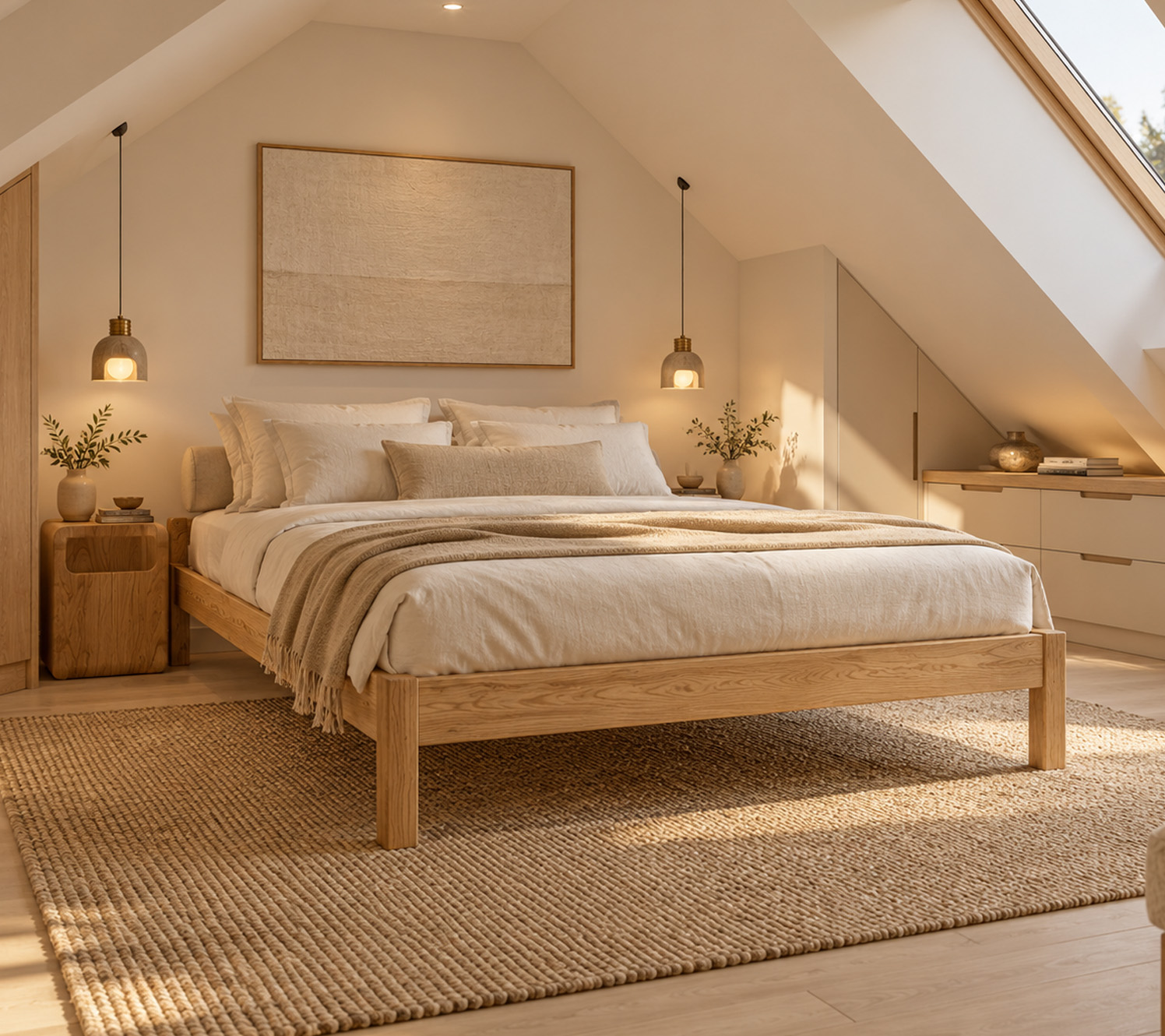
Smart loft bedroom design often relies on custom, low-profile storage that follows the pitch of the roof. Built-in drawers and cabinetry keep the perimeter clean while maintaining headroom where it matters. The room feels streamlined rather than squeezed.
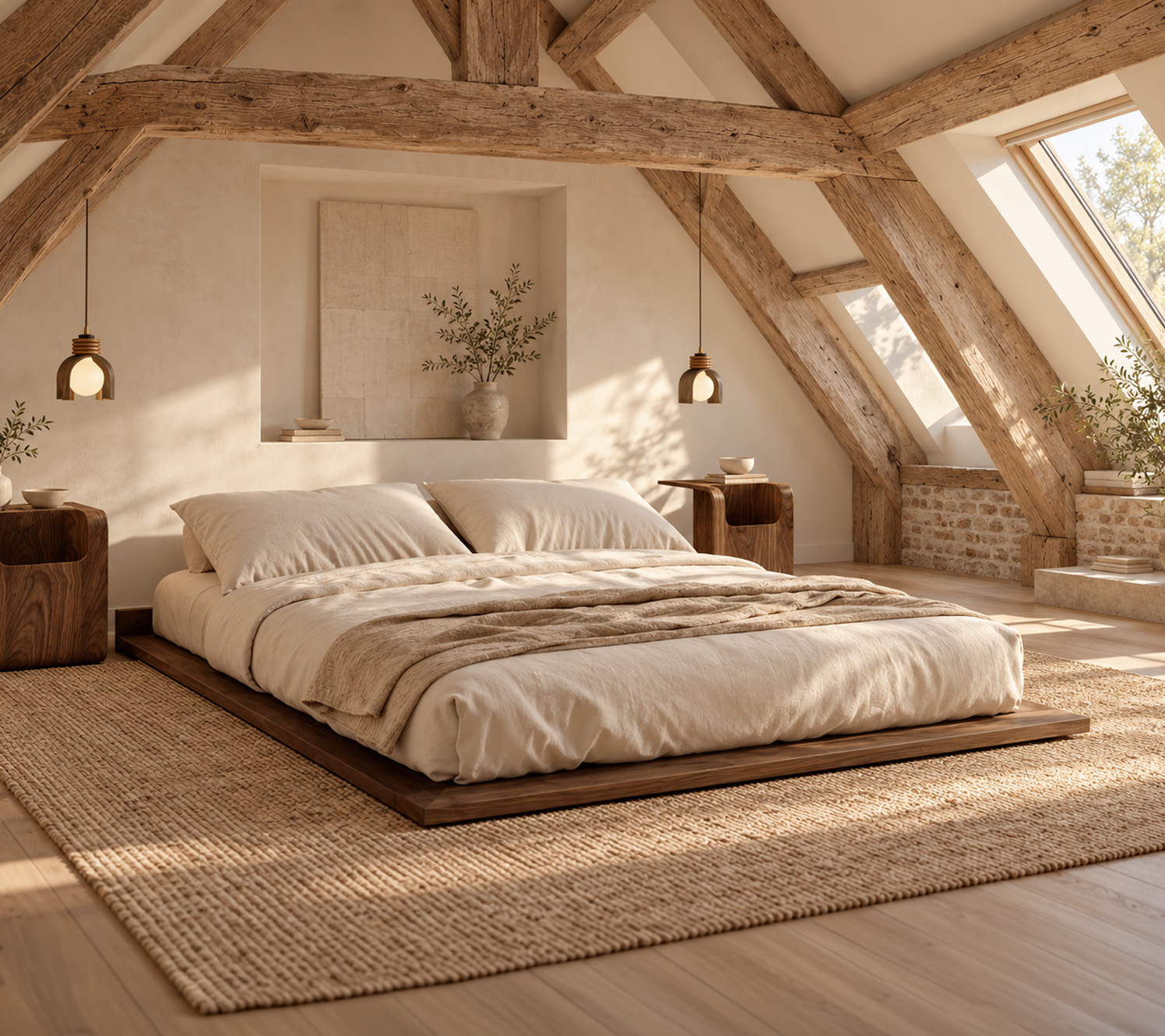
An attic bedroom design with exposed beams instantly adds depth and heritage. Instead of concealing wood, consider limewashing or lightly oiling it to soften contrast while preserving texture. It creates warmth without overwhelming the space.
Melanie Whetstone says: “In attic spaces, texture does more work than color. Wood, brick, and plaster bring subtle variation that stops pale rooms from feeling flat.”
Many attic bedroom decor schemes favor tonal neutrals — chalk, oat, warm white — to reflect natural light from roof windows. By layering similar shades across walls, bedding, and upholstery, the room feels expansive rather than visually fragmented.
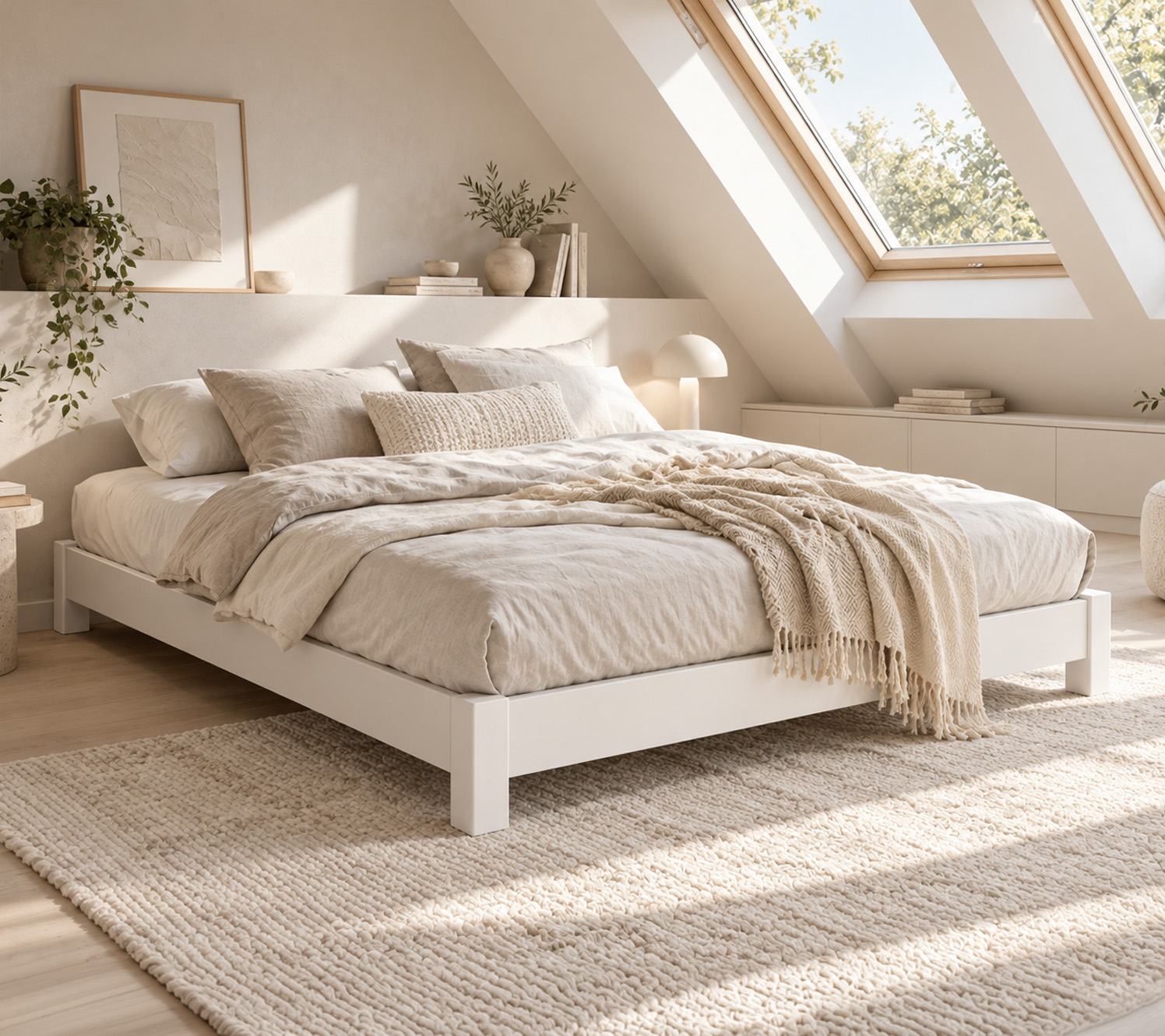
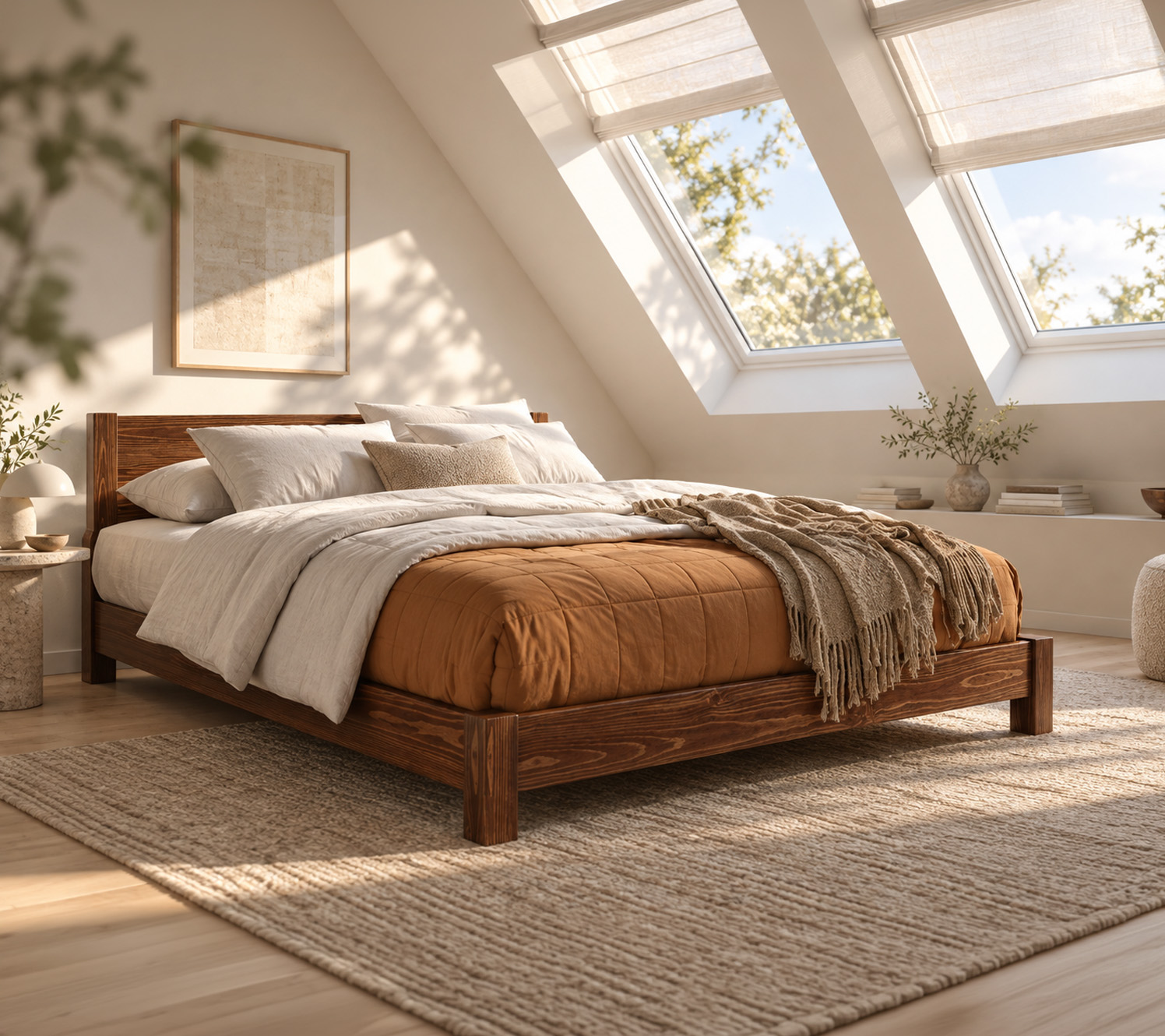
Roof windows are a defining feature in loft bedroom ideas. Keeping surrounding finishes simple allows the changing sky to become a living focal point. Sheer blinds maintain privacy while preserving that airy, elevated feeling.
In attic bedroom ideas, a low wooden bed works beautifully beneath sloped ceilings. The reduced height enhances the sense of headroom, while solid wood adds warmth and weight against plaster, brick, or painted beams. It keeps the architecture feeling open rather than crowded.
Melanie Whetstone adds: “Low wooden beds are particularly effective in attic spaces. They respect the ceiling line, which instantly makes the whole room feel more considered.
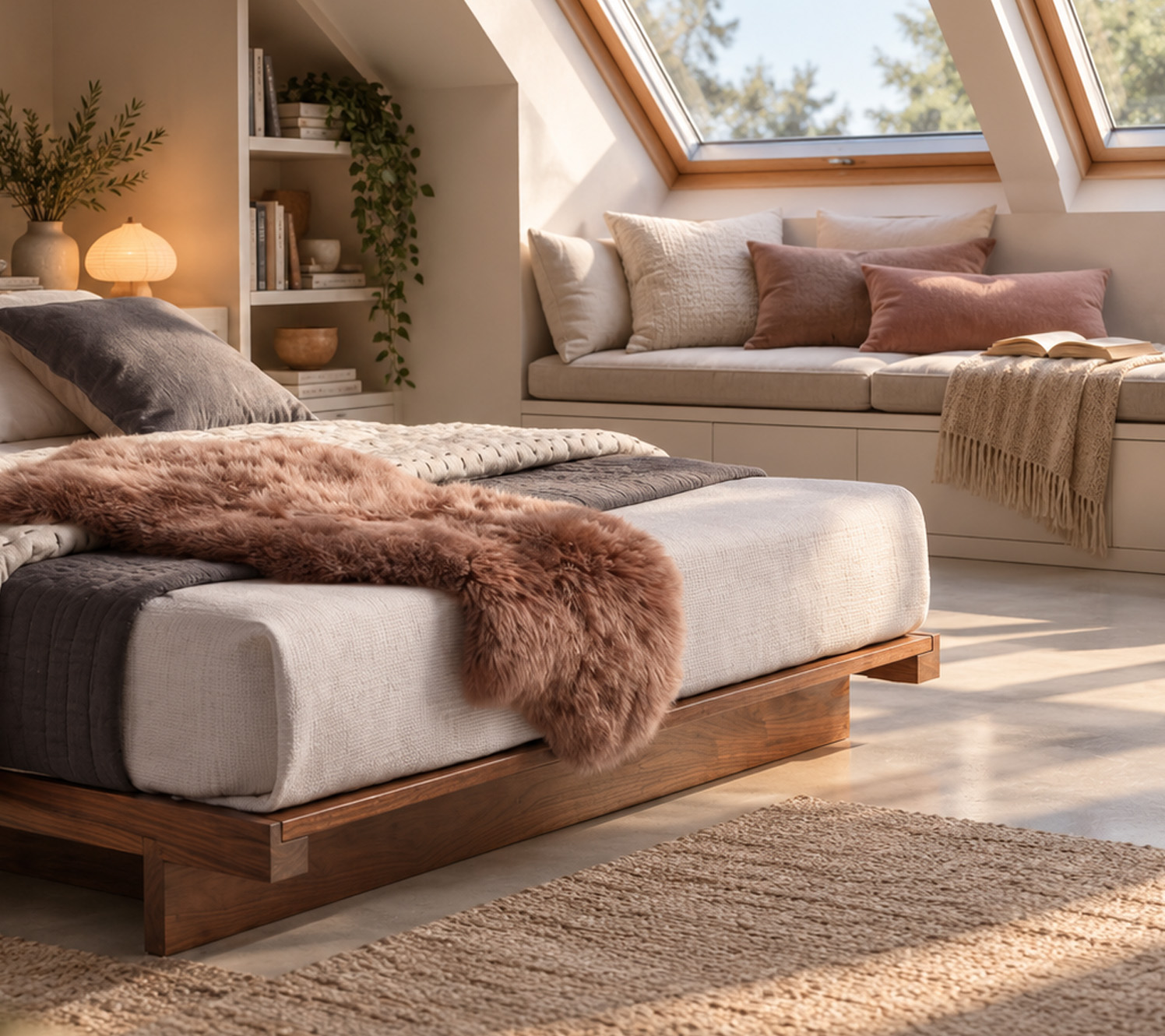
Clever attic conversion bedroom ideas often carve out underused corners into window seats or reading alcoves. These small interventions make the room feel considered, turning leftover space into a lifestyle feature.
Rather than painting every wall, attic bedroom ideas in 2026 focus color on the vertical gable wall. A muted sage, inky blue, or earthy clay adds depth without shrinking the room’s perceived height.
Melanie Whetstone notes: “In attic spaces, color placement is more important than color choice. Use it where the eye naturally rests.”
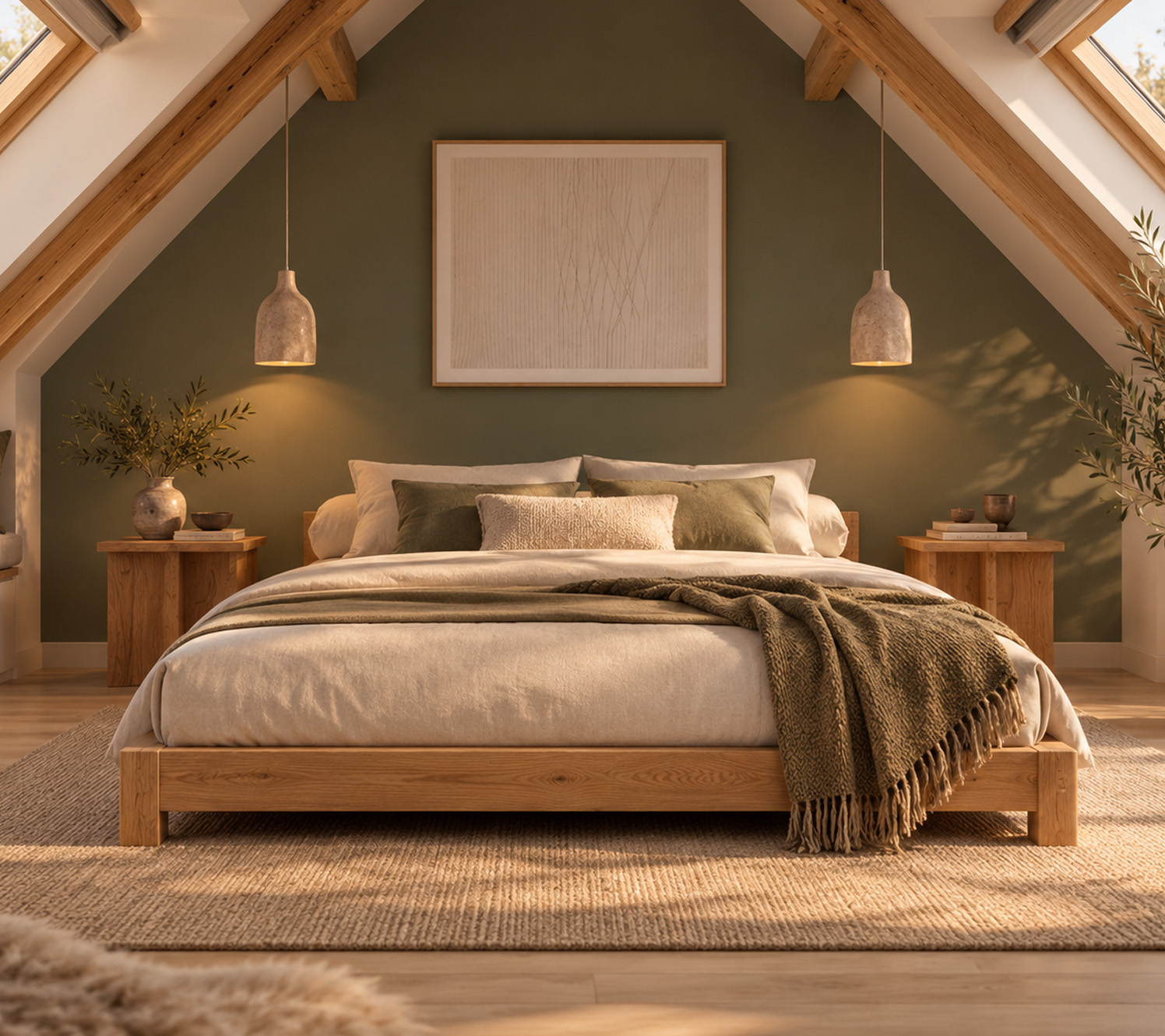
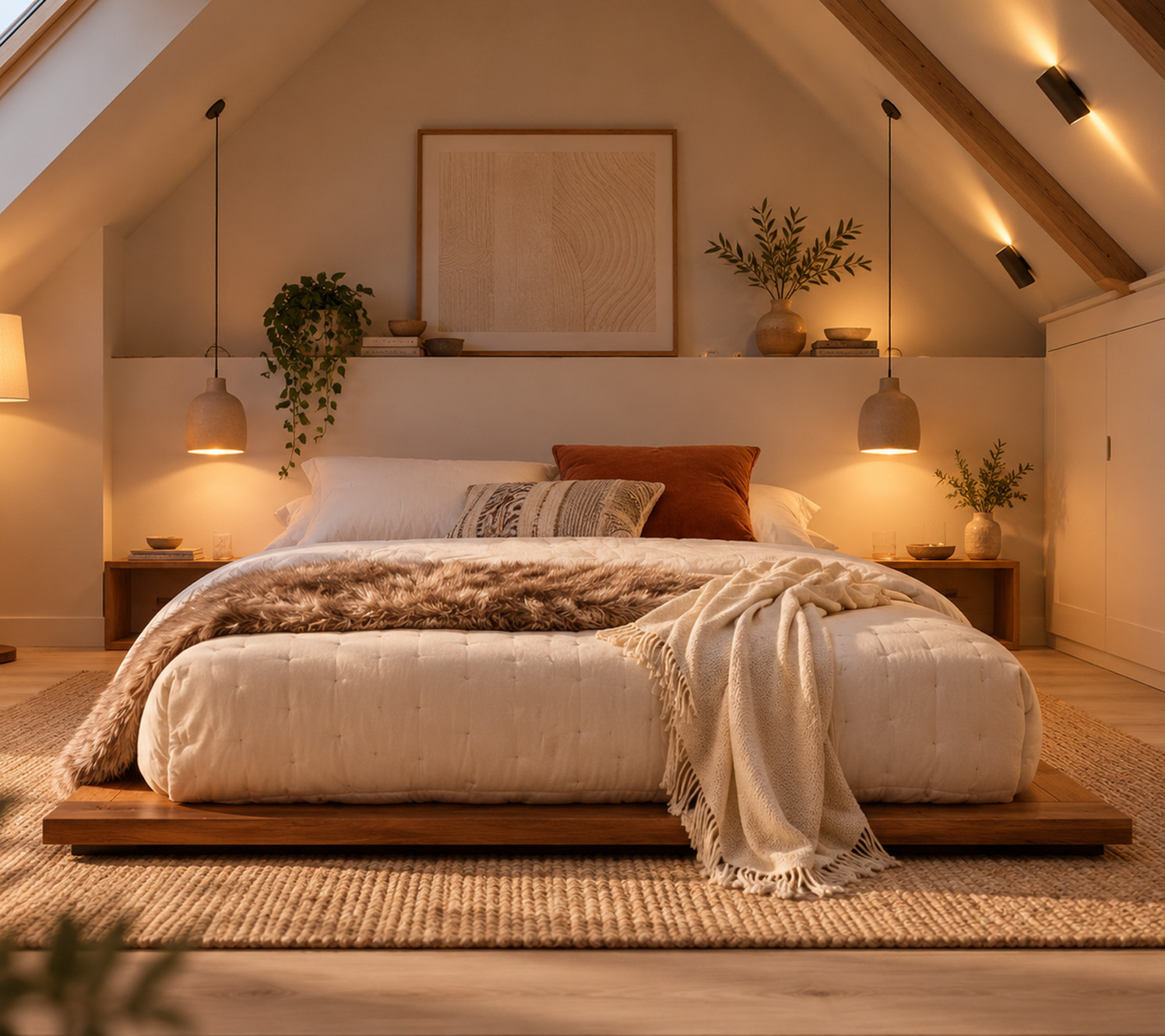
Instead of one central fixture, attic bedroom decor increasingly uses layered lighting. Wall lights along slopes, low pendants either side of the bed, and subtle floor lamps. This prevents harsh shadows and enhances the room’s intimate mood.
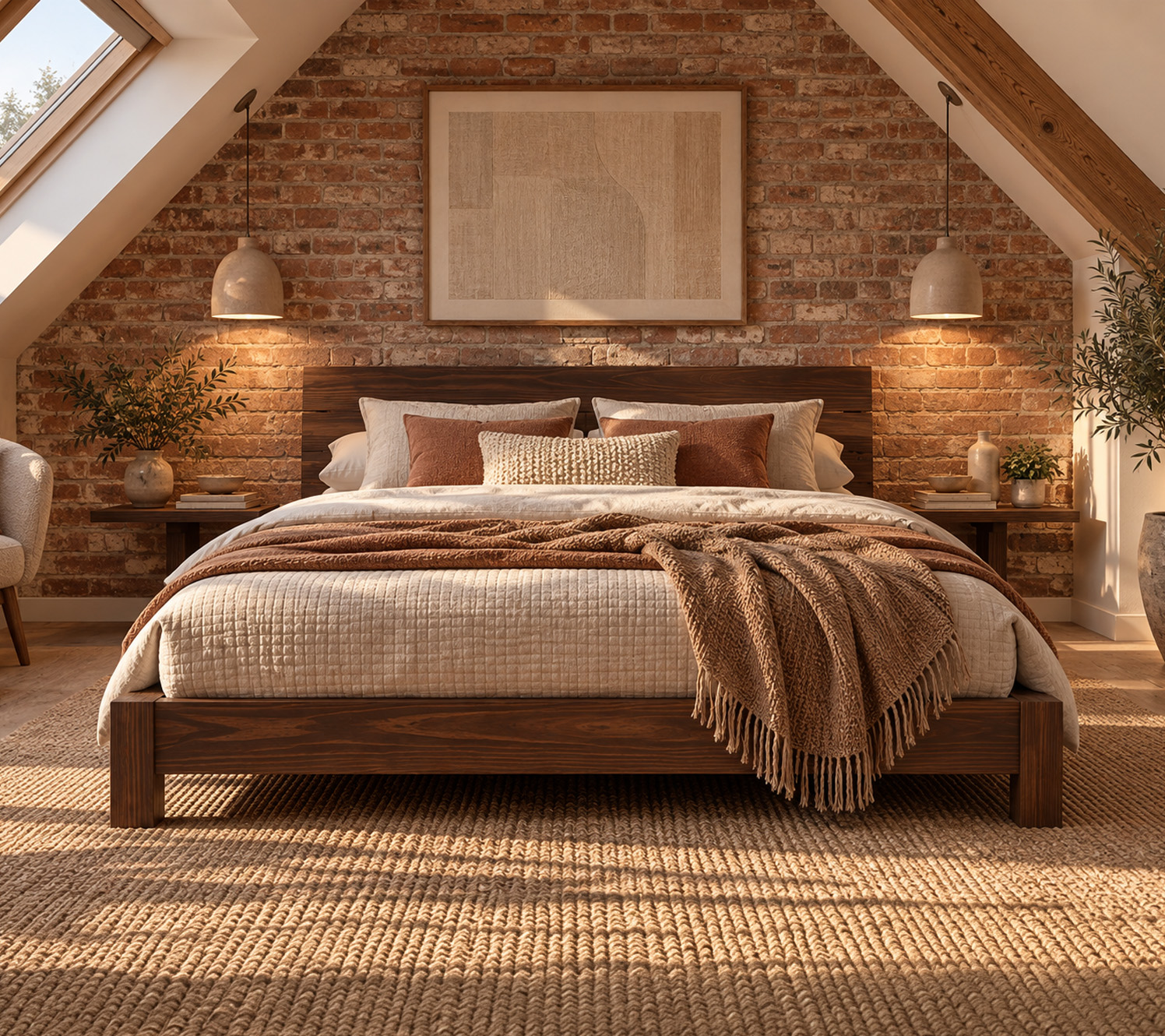
In period conversions, retaining exposed brick adds raw character to attic bedroom design schemes. Pairing it with soft bedding and pale plaster walls prevents the space from feeling too industrial or stark.

WE VALUE YOUR PRIVACY
We use cookies to enhance your browsing experience, serve personalised ads or content, and analyse the traffic with 3rd party services. By clicking ‘Accept’, you consent to our use of cookies, visit our Privacy Policy and our Cookie Policy for more info.
Note: International shipping prices are charged per bed rather than per order. This is due to the bulky nature and weight of these products.